Institutional leadership
Institution building, operating-model design, organisational integration, strategic planning, KPI and performance systems, and change management (Prosci).
AI Capability, Technology Governance & Institutional Transformation Executive. Nearly twelve years of leadership across a national AI authority, a national technology company and a research university — and a working software engineering researcher.
I build and govern national AI and technology capability institutions. Nearly twelve years of executive leadership sit behind that sentence, across a national AI authority, a national technology company and a research university, alongside a research record of 146 peer-reviewed publications.
Today I serve as General Manager of the SDAIA Academy at the Saudi Data & Artificial Intelligence Authority, leading 70 staff across five operating units. Since March 2026 the Academy has trained 6,000+ data and AI specialists, which took its cumulative total to 18,000 against a 2030 target of 20,000. In August 2026 I led the integration of the Information Technology Institute into the Academy — 68+ programmes, 6,000+ enrolled trainees and about 50 staff under one operating model — and rebuilt how the Academy measures itself: 12 core KPIs and an executive scorecard that track skills, employment and professional impact rather than training completion alone.
The same mandate extends regionally. I chair the Capacity Building & Partnerships team of the Arab Standing Committee on Artificial Intelligence and Emerging Technologies, under the Arab Ministerial Council for Communications and Information, and serve as vice-chair of its AI Governance team — work that turns national capability practice into a shared Arab agenda of skills frameworks, capacity mapping and partnerships for 2026–2029.
Before that, at Tahakom, the national smart-mobility and public-safety technology company, I was Director of the AI Academy and Acting Director of Technology Governance, with control of technology procurement, GRC, processes and KPIs for the company’s technology asset portfolio. The enterprise-architecture programme I directed raised maturity from Level 2 to Level 4 on external assessment; the CMMI programme I initiated took the AI and Advanced Technologies sector to Level 3; and the consulting engagement I supervised produced the company’s AI strategy, use-case portfolio and AI governance policy, approved by the CEO.
Across nearly a decade at Prince Sultan University I served as founding dean of the College of Space & Aviation Sciences, Dean of Quality Assurance & Development, Dean of Educational Services, Chief Information & Technology Officer and department chair. The outcomes were institutional: first-time ABET and HCÉRES accreditations and a renewed AACSB, the university’s fourth strategic plan, an ERP delivered for 500 users in four months, and a college, founded under agreements with the Saudi Space Agency and NASA, that has since opened.
Research has never been a side activity. Alongside the peer-reviewed record, my current programme is a 2026 series of working papers on AI-native and agentic software engineering — the architecture, lifecycle, governance and education implications of systems that increasingly write and maintain themselves.
I hold a Ph.D. in Software Engineering from North Dakota State University, an M.S. from DePaul University, and a B.S. in Computer Science from Prince Sultan University, where I later held the rank of Full Professor of Software Engineering. I am a Prosci® Certified Change Practitioner and completed the strategy specialisation at Harvard Business School Online.
What I care about, in one sentence: responsible, outcome-driven adoption of technology that leaves an institution more capable than it was.
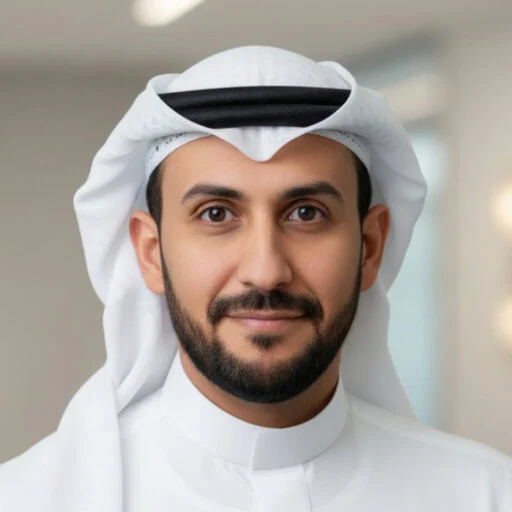
Institutional leadership makes strategy executable. Governance makes technology and AI adoption accountable. Capability building makes both last.
Institution building, operating-model design, organisational integration, strategic planning, KPI and performance systems, and change management (Prosci).
Technology governance, AI governance, enterprise architecture, portfolio and asset governance, GRC, PMO, CMMI and ISO quality systems.
National AI and data capability, workforce development, professional certification, accreditation, strategic partnerships, and alignment with Vision 2030 and the Human Capability Development Program.
North Dakota State University
Fargo, ND · 2011–2014
Thesis: A New Coupling Metric: Combining Structural and Semantic Relationships.
DePaul University
Chicago, IL · 2010–2011
Requirements engineering, software design and architecture, project management, OO design patterns, testing and QA.
Prince Sultan University
Riyadh, KSA · 2005–2010
Software engineering, advanced software engineering, internet security and firewalls.
Change management, the ADKAR model and organisational transformation.
Strategy Execution, Sustainable Business Strategy and Disruptive Strategy.
Associate Professor 2018–2022; Assistant Professor 2014–2018.
The experience record has the full detail of roles, scope and results; the impact page sets out six cases and what was built; the publication list is searchable by year, venue and type.